


Why do your muscles feel sore—even on days you didn’t push that hard?
Soreness is one of the most misunderstood signals in the body.
Most people treat it like an inconvenience.
But in reality, it’s your muscles trying to communicate something important.
Let’s break down what soreness actually means, and why understanding it can change the way you recover, train, and take care of your body.
1. Not All Soreness Is the Same
We tend to label every ache as “soreness,” but your body uses different types of discomfort to tell different stories.
The main types include:
-
DOMS (Delayed Onset Muscle Soreness): Peaks 24–48 hours after a new or intense workout.
-
Tightness from Overuse: Comes from repeated micro-stress, not necessarily heavy training.
-
Inflammation-Based Tension: Caused by long sitting hours, poor posture, or stress.
-
Acute Strain Pain: Sharp, localized discomfort (your body’s “stop now” alarm).
Most people confuse all of these—but each requires a different approach.
2. What’s Happening Inside Your Muscles
When you feel sore, here’s what’s actually occurring beneath the surface:
-
Micro-tears in muscle fibers
-
Inflammation around those fibers
-
Fluid buildup that increases pressure
-
Temporary reduction in mobility and strength
This isn’t your body breaking down.
It’s your body trying to rebuild—stronger.
But only if you give it the right environment to repair.
3. Soreness Isn’t a Badge of Honor
There’s a myth: “If I’m not sore, I didn’t work hard.”
Science says otherwise.
Soreness reflects novelty, not effort.
Your muscles react strongly to unfamiliar stress—new workout, new intensity, new movement.
Once they adapt, soreness decreases even if your performance improves.
So soreness isn’t proof of progress.
Recovery is.
4. Why You Feel Sore Even Without Working Out
This is where most people get surprised.
You can feel sore from:
-
sitting for hours
-
sleeping in a poor position
-
carrying a bag on one side
-
stress-induced muscle contraction
-
dehydration
-
lack of daily movement
Your muscles aren’t only stressed at the gym—they’re stressed by life.
That’s why daily soreness is common even among people who don’t exercise regularly.
5. Your Body Is Asking for Better Recovery
Soreness is your body saying:
“I’m inflamed.”
“I’m overloaded.”
“I need circulation.”
“I need support before I break down.”
Ignoring this signal doesn’t make it go away—it often compounds into chronic tightness, reduced mobility, and faster muscle fatigue.
Recovery isn’t optional. It’s foundational.
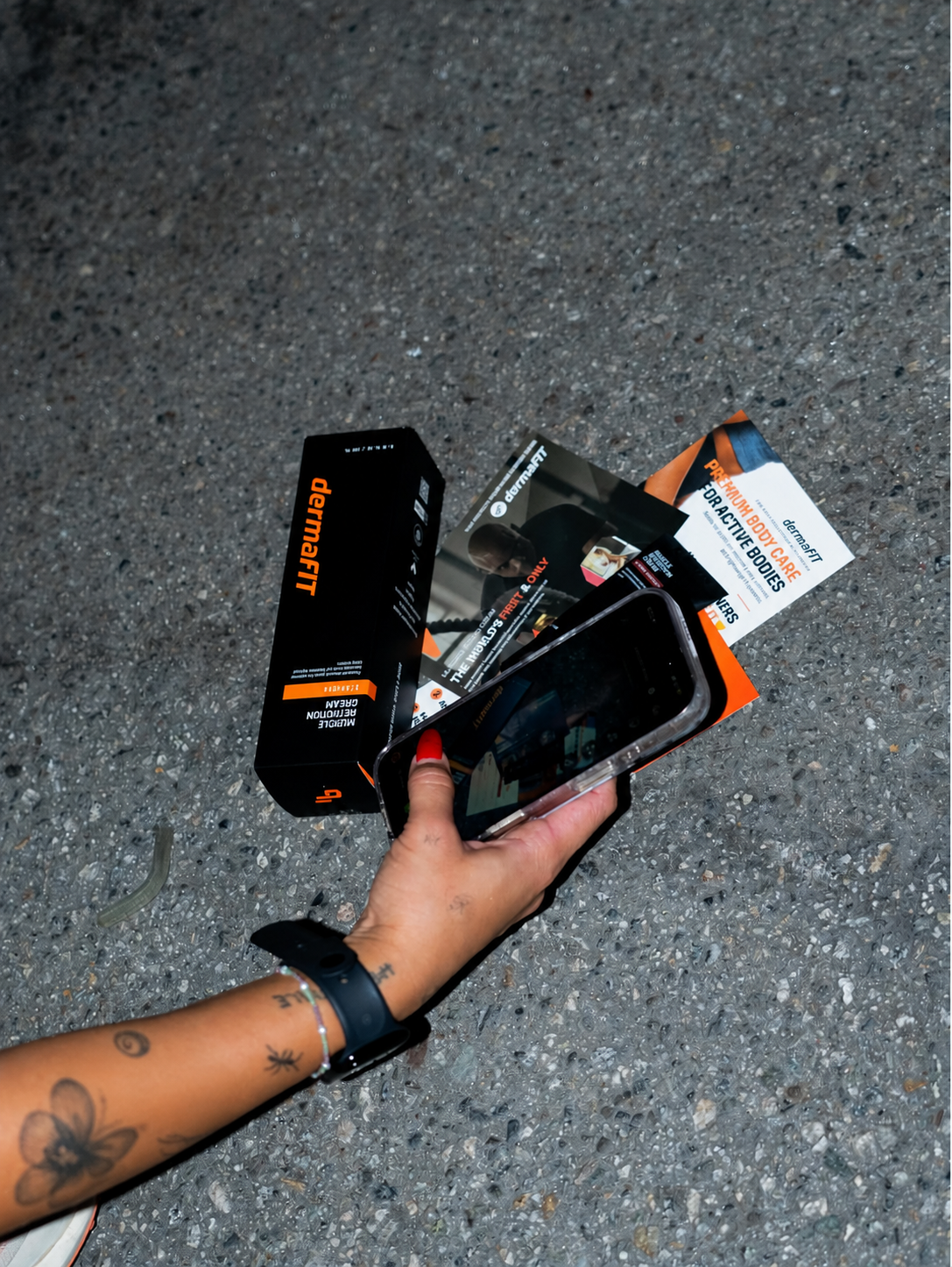
6. How dermaFIT Supports Sore Muscles
dermaFIT was built for the moments after your workout—and the moments you don’t realize are stressing your muscles.
Our formulas are designed to target the deeper layers where soreness actually starts, using:
-
exosome-inspired actives that support cellular communication
-
anti-inflammatory botanical complexes for soothing tense areas
-
fast-absorbing technology that reaches beyond the surface
-
cooling benefits that help reduce discomfort and tightness
It’s a daily ritual that helps your body do the repair work it’s already trying to do.
7. Listen to the Signal, Not the Pain
Soreness isn’t random.
It’s communication.
Understanding it gives you control—
over your recovery, your training, and your long-term strength.
And when you support your muscles the right way, they support you back in everything you do.
Your soreness is speaking.
Now you know what it means—
and how to respond.
dermaFIT helps your body recover deeper, move easier, and feel better every single day.

Share:
Your Lotion Isn’t Working for Your Muscles — Here’s Why
Your Body Is Asking for Better Recovery.